Can a Herniated Disc Heal Without Surgery?
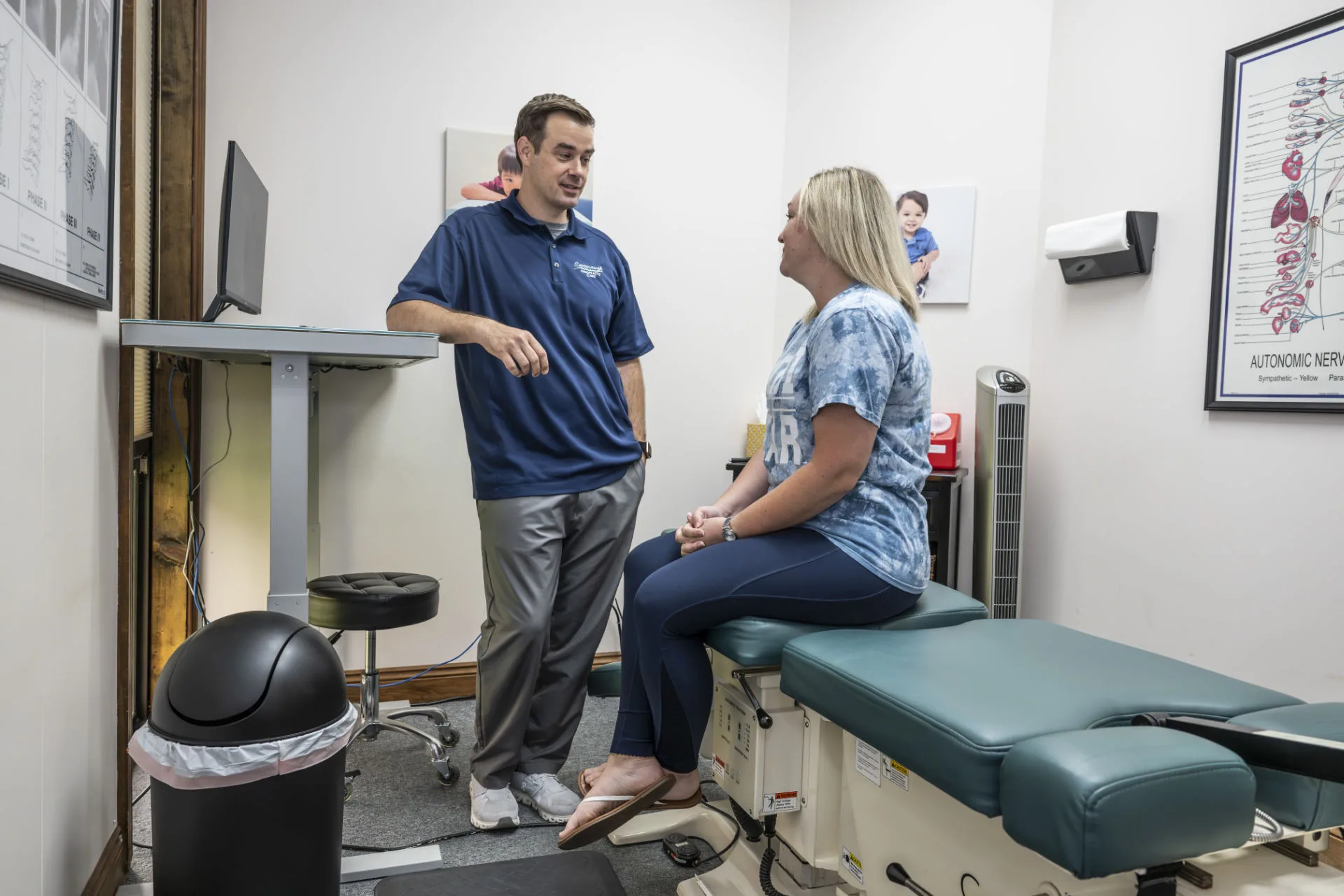
By Matthew Cavanaugh, DC | Cavanaugh Chiropractic
“Am I going to need surgery?”
When someone comes into my office with back pain shooting down their leg, that’s often one of their first questions. They’re hurting, they’re worried, and they want to know what happens next.
My honest answer is: I don’t know yet. I’m not a surgeon. My role is to evaluate you, determine whether conservative care is appropriate, and monitor how you respond.
Yes, many people with a herniated lumbar disc improve without surgery, and herniated disc material can sometimes shrink over time. Whether nonsurgical care is appropriate depends on your symptoms and examination.
For more about symptoms and our examination approach, see our Herniated Lumbar Disc condition page.
Can the disc itself heal?
A herniated disc can change over time. In some cases, displaced disc material shrinks or is gradually absorbed by the body, a process called resorption. Researchers have documented this on follow-up MRIs, including in patients with extruded discs, where material has extended beyond the disc’s outer boundary. This can happen over months, but it is not guaranteed.
That brings us to an important distinction: feeling better and having a disc that looks completely normal on an MRI are different things.
Disc findings can exist without symptoms. An MRI helps us understand the anatomy, but it has to be considered alongside your symptoms and examination. It does not tell the whole story by itself.
In practice, I want to know whether your pain is improving, whether you’re moving better, and whether your nerve function is stable or improving. Pain relief matters, but it isn’t the only thing we watch.
We don’t routinely need another MRI simply to prove that you’re doing better. Imaging is most useful when the result could change the next step in your care.
What does improvement actually look like?
Sometimes it looks like being able to tie your shoes again.
Sometimes it means getting on the floor with your grandkids, walking comfortably through your house, or doing a few chores without having to stop.
At our office, we ask a lot of questions about how your symptoms have changed. We track pain ratings, but we also ask what you can do.
Your idea of a “six out of ten” may be different from mine. What helps is following your own ratings over time and looking at them alongside changes in daily life.
Are you able to do more? Is the leg pain less frequent? Are you moving more comfortably?
Those answers help us judge progress. We begin with an examination and use follow-up questions, focused checks, and reassessment as needed to guide care.
What can nonsurgical care involve?
Conservative care should be tailored to your symptoms, examination, and tolerance. It may include guidance about activity, an exercise program, and, when appropriate, hands-on treatment. Medication or other medical care may also be part of your overall treatment plan, but those services are outside the chiropractic care we provide. When needed, we coordinate with or refer you to an appropriate medical provider for that part of your care.
Manual therapy, including spinal manipulation, is an option for some patients, but guidelines recommend using it as part of a program that includes exercise.
One misconception I hear is that an adjustment will push the herniated material back into place. That isn’t how I explain treatment. We aren’t manually putting a disc back where it belongs.
I also don’t expect someone to tolerate a treatment that is making them worse. If an approach is too painful or isn’t helping, we reassess and discuss a different approach or referral.
Recovery can be gradual
I remember a patient early in my career who had severe pain down his leg. He struggled to walk down the hall and stood noticeably crooked. Even attempting to stretch his leg was too painful.
When he wasn’t improving, we obtained an MRI that showed a disc herniation. We changed his treatment plan, which included adding treatment on a decompression table.
Over the following weeks to months, he gradually stood more upright, walked more comfortably, and eventually reported that the pain down his leg had subsided.
To someone living with constant pain, that progress didn’t feel fast. But the change in what he could do was meaningful.
That is one patient’s experience. It cannot tell us how much improvement came from a particular treatment, natural recovery, or the combination, and it does not predict someone else’s result.
It also taught another useful lesson: when he had later episodes of back pain, we still needed to assess what was happening at that time. An old disc diagnosis shouldn’t become the automatic explanation for every new symptom.
Should you rest until the pain is gone?
Severe pain may require temporarily reducing your activity. But prolonged bed rest is generally discouraged. A gradual return to tolerable movement, such as short walks, is usually encouraged, with activity adjusted to your symptoms and clinical guidance.
In our office, I also emphasize the work that continues after pain improves: building strength, practicing daily movements, and gradually getting back to activities.
That doesn’t mean you caused your injury by moving “wrong.” It means recovery is an opportunity to build confidence and capacity for the things you want to do.
When should you seek urgent help?
Some symptoms should not wait for another treatment appointment.
Go to an emergency department immediately if back or leg pain comes with new difficulty passing urine, loss of bladder or bowel control, or numbness around the genitals, buttocks, or inner thighs. These can be signs of a serious nerve compression emergency.
New or worsening true weakness also needs urgent medical assessment, especially if you cannot lift your foot or toes or begin tripping because your foot won’t clear the floor. We should not wait for visible muscle wasting before acting.
Fever, unexplained weight loss, or a relevant cancer or infection history also warrants medical evaluation. Those findings don’t automatically mean something serious is present, but they can change what needs to be investigated.
When does surgery become the right conversation?
A surgical consultation may be appropriate when disabling symptoms persist despite nonsurgical care or neurological problems develop. A consultation helps determine the options; it does not automatically mean an operation.
Most lumbar disc patients I see do not end up needing surgery. But some do, and I’ve seen appropriately selected patients do very well afterward.
Early in my career, I was much more opposed to surgery. Experience changed that. My goal is to help you get better, including helping you reach the right specialist when that is the next step.
If you’re worried about a herniated disc, start with an evaluation. We can discuss your symptoms, whether conservative care makes sense, and what changes would lead us to recommend another approach.
Contact Cavanaugh Chiropractic to request an appointment. If you have the emergency symptoms described above, seek emergency care instead of waiting for an office appointment.
References
Ready to start feeling better?
Take the first step towards lasting relief. We're ready when you're ready.
Schedule an Appointment